juli 2025
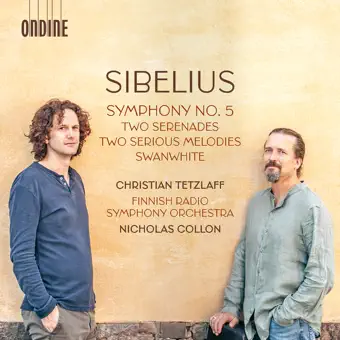
Sibelius: Orchestral Works (Live)
Christian Tetzlaff & Finnish Radio Symphony Orchestra o.l.v. Nicholas Collon
Een prachtige Vijfde, die de schoonheid van Sibelius’ kunst tot uitdrukking brengt en perfect aansluit bij zijn vioolmuziek gespeeld door Christian Tetzlaff.

Dit is buitengewoon. De langste zonsopgang in de muziek ontstaat door de frisse, schone lucht in Nicholas Collons wonderbaarlijk heldere interpretatie van de Vijfde symfonie. Houtblazers zijn scherp geprofileerd, ritme en dynamiek staan direct voorop. Zelfs in stilstand is er een dwingende noodzaak in zijn lezing. Het is een landschap dat het Fins Radio Symfonie Orkest natuurlijk goed kent, maar het behoudt zijn mysterie. Het onderzoekende middendeel van het eerste deel, waar we plotseling gehuld worden in wolken en mist, is buitengewoon sfeervol, de eenzame fagot verloren in tijd en ruimte. Maar dan komt uiteindelijk de majestueuze zonnestraal en het daaropvolgende gevoel dat de hele natuur danst. Opnieuw maken de beet en de opbeuring in het ritme de coda superopwindend.
Het woord dat ik zou gebruiken om het tweede deel te beschrijven is helder, maar bij een componist kun je nooit raden dat er die grondverruimende modulatie in het hart van het deel zit, waar een diepe soulfulness de objectiviteit doorbreekt. De finale heeft natuurlijk zijn verstilde 'lentegeritsel'-moment, dat Collon en zijn orkest adembenemend maken zonder het gevoel van 'kijk eens hoe zacht we kunnen spelen'. Er zit zoveel lucht in de textuur dat het alleen verzadigd raakt met de ultieme koperblazers van de coda. De meest vreugdevolle dissonantie wordt consonant gemaakt – tot aan de onbeantwoorde vragen van de slotakkoorden.
De rest van de cd toont gedeeltelijk Sibelius' favoriete instrument – de viool – in de welsprekende en gevoelvolle handen van Christian Tetzlaff. De Twee Serenades zijn zoveel complexer dan hun titel suggereert en Tetzlaff en Collon suggereren beiden dat geen van beiden precies weet waar Sibelius' nieuwsgierige aard hen vervolgens heen zal voeren. De melancholie van de tweede serenade wordt door Tetzlaff verrukt aangepakt. Zo ook de eerste van de Twee Serieuze Melodieën voor viool of cello, waar het alternatieve instrument op de een of andere manier geestelijk aanwezig is.
De zeldzaamheid hier is de muziek die Sibelius schreef voor Strindbergs symbolistische toneelstuk Zwanenwit. Opnieuw is het de bedrieglijke mix van picturale charme en grilligheid met iets diepers en ongrijpbaarders. Er is 'De Pauw' die pronkt met zijn castagnetten en 'De Harp' (spreekt voor zich), dat zo doet denken aan het middendeel van de Vijfde symfonie. Maar dan komt 'De Prins Alleen', gepassioneerd en onzeker, en het culminerende 'Loflied', dat symfonisch is in zijn aspiratie. Fantastisch en vindingrijk spel van begin tot eind.
Een schitterende cd dus, met de Vijfde symfonie als een echte kanshebber in een onmogelijk druk veld.

This is outstanding. The longest sunrise in music emerges through crisp clean air in Nicholas Collon’s wonderfully lucid account of the Fifth Symphony. Woodwinds are keenly profiled, rhythm and dynamics immediately a priority. Even in stasis there’s an imperative to his reading. It’s a landscape that the Finnish Radio Symphony Orchestra know well, of course, but it retains its mystery. The searching middle section of the first movement where we are suddenly enveloped in cloud and mist is extraordinarily atmospheric, the solitary bassoon lost in time and space. But then finally comes the majestic sunburst and the subsequent feeling that all nature is dancing. Again the bite and uplift in the rhythm makes the coda super-exhilarating.
The word I’d use to describe the second movement is limpid but with a composer you can never second-guess there is that ground-swelling modulation at the heart of the movement where a deep soulfulness breaks through the objectivity. The finale, of course, has its hushed ‘rustle of spring’ moment which Collon and his orchestra make breathtaking without that feeling of ‘look how quietly we can play’. There is so much air in the texture becoming saturated only in the coda’s ultimate blaze of brass. The most joyous dissonance made consonant – right down to the unanswered questions of the final chords.
The rest of the disc in part showcases Sibelius’s instrument of choice – the violin – in the eloquent and soulful hands of Christian Tetzlaff. The Two Serenades are so much more complex than their title suggests and Tetzlaff and Collon both have a way of suggesting that neither is quite sure where Sibelius’s inquisitive nature will take them next. The melancholia of the second serenade is rapturously addressed by Tetzlaff. Likewise the first of the Two Serious Melodies for violin or cello where somehow or other the alternative instrument is there in spirit.
The rarity here is the music Sibelius wrote for Strindberg’s symbolistic play Swanwhite. Again it’s the deceptive mix of pictorial charm and whimsy with something deeper and more elusive. There is ‘The Peacock’ strutting its stuff replete with castanets and ‘The Harp’ (self-explanatory) which is so redolent of the middle movement of the Fifth Symphony. But then comes ‘The Prince Alone’, passionate and uncertain, and the culminating ‘Song of Praise’ which is symphonic in its aspiration. Terrific and resourceful playing throughout.
A splendid disc, then, with the Fifth Symphony a real contender in an impossibly crowded field.